Poor temperature control can cause energy waste, unstable comfort, and equipment inefficiency. Left unresolved, operating costs may increase. Thermal actuators provide automatic, temperature-responsive control.
A thermal actuator converts temperature changes or electrical heating into mechanical movement. In HVAC systems, it commonly opens or closes valves to regulate the flow of hot or chilled water. By automatically adjusting valve position according to control signals, thermal actuators help maintain desired temperatures, improve system efficiency, and reduce unnecessary energy consumption.
Understanding how a thermal actuator works makes it easier to select and apply the right device in an HVAC system.
Для чего нужен термопривод?
A thermal actuator is a control device that produces mechanical movement in response to temperature change.
In HVAC applications, it is commonly installed on control valves used in heating and cooling circuits. Its main function is to:
- Open or close a valve
- Control hot or chilled water flow
- Regulate heating or cooling output
- Support automatic zone temperature control
- Reduce unnecessary energy consumption
Depending on the system, the controlled medium may be hot water, chilled water, or another fluid used for temperature regulation.
For example, when a room thermostat detects that the indoor temperature has fallen below the setpoint, it can send a signal to the thermal actuator.
The actuator then moves the connected valve, allowing hot water to pass through a radiator, underfloor heating circuit, or heating coil.
Once the required room temperature is reached, the thermostat changes its signal. The actuator responds by reducing or stopping the water flow.
This automatic process allows HVAC systems to control different spaces without continuous manual valve adjustment.
Thermal actuators are generally compact and relatively simple compared with larger motorized actuators. Their gradual movement also makes them suitable for many hydronic heating and cooling applications.
Как работает термопривод?
Most thermal actuators operate through the controlled expansion and contraction of a temperature-sensitive material.
1. The Control Signal Is Received
A thermostat, controller, or building management system sends an electrical signal to the actuator when heating or cooling is required.
2. Нагревательный элемент находится под напряжением
Inside an electrothermal actuator, an electrical heating element begins to warm an expandable material.
3. The Internal Material Expands
As the temperature rises, the material expands.
This expansion creates linear mechanical force inside the actuator.
4. The Actuator Moves the Valve
The generated force moves an internal piston or stem.
The movement is transferred to the connected valve stem, causing the valve to open or close.
This allows the HVAC system to increase, reduce, or stop the flow of water through the heating or cooling circuit.
5. Привод возвращается в исходное положение
When electrical power is removed, the internal material gradually cools and contracts.
A spring or similar return mechanism then moves the actuator and valve back toward their default position.
Because thermal actuators rely on heating and cooling, their movement is generally slower than that of some motorized valve actuators.
The actual operating time depends on factors such as actuator design, ambient temperature, stroke length, and application conditions.
Термоприводы «нормально закрытого» и «нормально открытого» типа
Thermal actuators are commonly available in two basic configurations.
Термопривод с нормально закрытым контактом
A normally closed actuator keeps the valve closed when electrical power is not supplied.
When the actuator is energized, it moves the valve toward the open position.
This configuration is commonly used in systems where water flow should stop when electrical power is lost.
Термопривод нормально открытого типа
A normally open actuator keeps the valve open when electrical power is not supplied.
When energized, the actuator moves the valve toward the closed position.
The correct configuration depends on:
- HVAC system design
- Требования к безопасности
- Desired fail position
- Тип клапана
- Стратегия управления
The actuator must therefore be matched correctly with the valve and control system.
Common Uses of Thermal Actuators
Thermal actuators are widely used in hydronic HVAC systems where automatic water-flow regulation is required.
Системы теплого пола
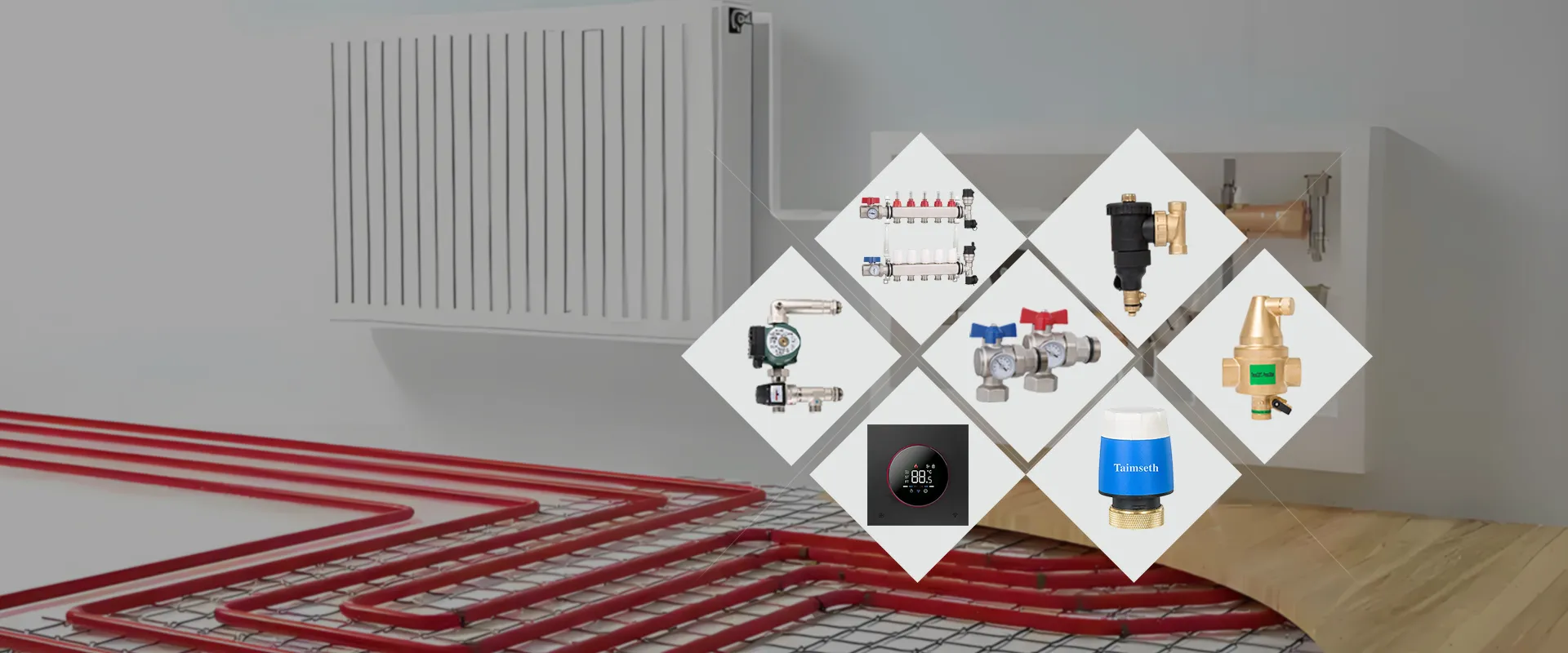
Underfloor heating is one of the most common applications.
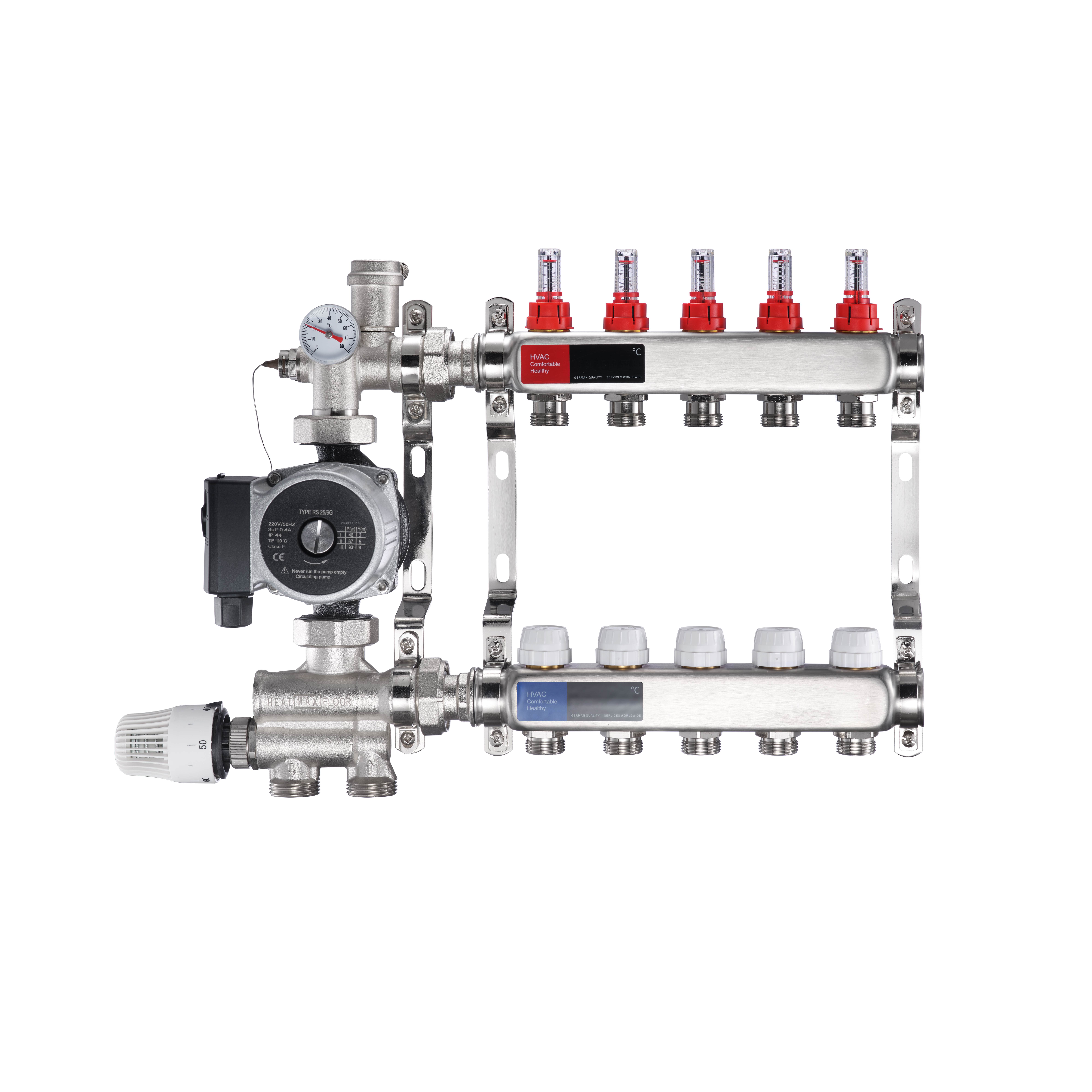
In a multi-zone system, each heating circuit can be connected to an individual valve and thermal actuator.
A thermostat in each room controls the corresponding actuator, allowing different areas to maintain different temperature settings.
This supports independent zone control and helps reduce unnecessary heating.
Radiator Heating Systems
Thermal actuators can also control valves in radiator heating systems.
Instead of allowing hot water to flow continuously, the actuator regulates flow according to room temperature demand.
This can improve temperature control and reduce unnecessary energy use.
Фанкойлы
Fan coil units use hot or chilled water to provide heating or cooling.
A thermal actuator installed on the control valve can regulate water flow through the coil according to signals from a thermostat or central control system.
When more heating or cooling is required, the actuator adjusts the valve position accordingly.
Вентиляционные установки
Thermal actuators may also be used with air handling equipment containing heating or cooling coils.
By controlling the associated water valve, the actuator helps regulate coil capacity and maintain the required supply-air temperature.
Commercial HVAC Zone Control
Commercial buildings often contain areas with different occupancy levels and heating or cooling requirements.
К типичным областям применения относятся:
- Офисные здания
- Отели
- Schools
- Shopping centers
- Public buildings
- Промышленные объекты
Thermal actuators allow individual zones to receive heating or cooling according to actual demand rather than operating every area at the same level.
Building Management Systems
Thermal actuators can also form part of an integrated HVAC control strategy.
Depending on project requirements, HVAC systems may integrate energy-saving controls, building management systems, and remote monitoring functions. Jinyi HVAC provides customized HVAC solutions that can incorporate BMS and intelligent control features for industrial and commercial projects.
Что следует учитывать при выборе термопривода?
Choosing the correct actuator requires more than selecting a normally open or normally closed model.
К важным факторам относятся:
- Рабочее напряжение — The actuator must match the control power supply.
- Совместимость с клапанами — The connection and actuator movement must suit the valve.
- Stroke length — The actuator must provide sufficient movement for the valve.
- Actuating force — The available force must be sufficient to operate the valve reliably.
- Control type — The actuator should match the required control strategy.
- Рабочая температура — The actuator should be suitable for the installation environment.
- Default position — Normally open or normally closed operation should match system requirements.
Incorrect selection may prevent the valve from opening or closing properly and can reduce overall system performance.
Correct matching between the actuator, valve, controller, and HVAC system therefore supports reliable long-term operation.
Why Are Thermal Actuators Important in HVAC Systems?
Thermal actuators provide a relatively simple way to automate water-flow control in heating and cooling systems.
By responding to thermostat or controller signals, they help HVAC systems supply heating or cooling only when required.
This supports:
- More accurate temperature regulation
- Independent zone control
- Reduced unnecessary water circulation
- Improved system efficiency
- More automated HVAC operation
- Better integration with modern control systems
Their compact design and relatively simple operating principle make thermal actuators practical components in many residential, commercial, and industrial HVAC applications.
In summary, a thermal actuator automatically controls HVAC valves, regulating water flow to maintain temperature, support zoning, and improve system efficiency.