Um controlo inadequado da temperatura aumenta os custos energéticos, reduz o conforto e afeta a fiabilidade dos sistemas de climatização. Os atuadores térmicos resolvem estes problemas, permitindo um controlo preciso e automático das válvulas.
Um atuador térmico converte energia térmica ou um sinal de controlo elétrico em movimento mecânico. Nos sistemas de AVAC, controla habitualmente válvulas que regulam a água quente ou fria. Os principais tipos incluem atuadores termoelétricos, de cera, bimetálicos, pneumáticos, hidráulicos e motorizados, cada um adequado a diferentes requisitos de controlo e condições de funcionamento.
Compreender os seus princípios de funcionamento e as suas diferenças facilita a escolha do atuador adequado para um sistema de AVAC.
O que é um atuador térmico?
A atuador térmico é um dispositivo de controlo que produz movimento mecânico em resposta ao calor, a variações de temperatura ou a um sinal elétrico que gera calor internamente.
Nos sistemas de climatização, os atuadores térmicos são normalmente instalados em válvulas de controlo utilizadas em:
- Unidades de ventilação e refrigeração
- Sistemas de radiadores
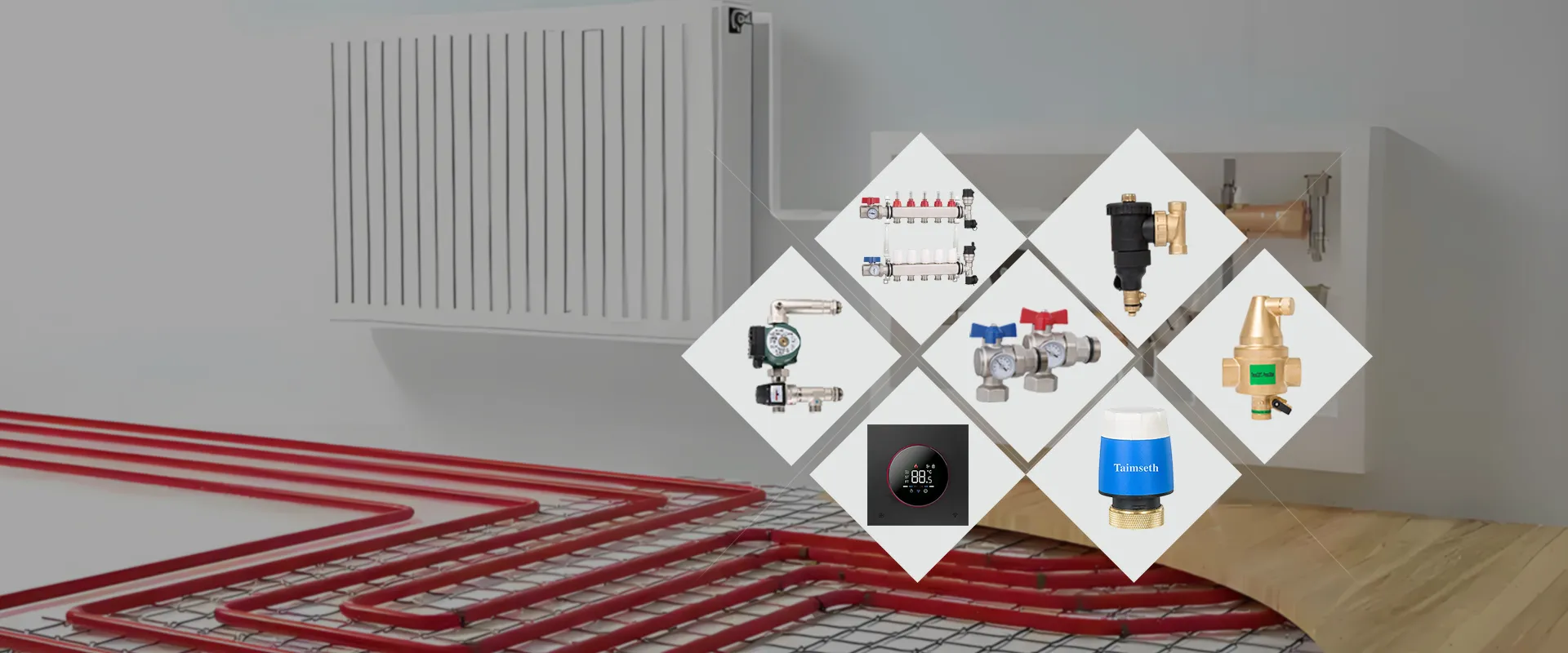
- Sistemas de aquecimento por piso radiante
- Coletores de aquecimento e refrigeração
- Sistemas de climatização por zonas
- Sistemas de controlo de edifícios comerciais
O seu principal objetivo é regular o fluxo de água quente ou fria de acordo com a procura real de aquecimento ou arrefecimento.
Por exemplo, quando um termóstato deteta que uma divisão necessita de aquecimento, envia um sinal ao atuador. O atuador abre a válvula associada, permitindo que a água quente flua através do terminal de aquecimento. Assim que a temperatura ambiente pretendida for atingida, o sinal de controlo altera-se e a válvula fecha-se.
Este processo automático contribui para manter temperaturas interiores mais estáveis, reduzindo simultaneamente o consumo desnecessário de energia.
Como funciona um atuador térmico?
O princípio de funcionamento depende do design do atuador.
Um atuador termoelétrico típico é composto por três componentes principais:
- Elemento de aquecimento elétrico
- Material de expansão sensível à temperatura
- Mecanismo de pistão ou de eixo
Quando é fornecida energia elétrica, o elemento de aquecimento aumenta a temperatura do material de expansão interno.
À medida que o material aquece, expande-se e gera uma força mecânica. Esta força empurra o eixo do atuador, que, por sua vez, abre ou fecha a válvula do sistema de climatização ligada.
Quando o sinal elétrico é desligado, o material arrefece e contrai-se gradualmente. Uma mola ou um mecanismo de retorno faz com que o atuador volte à sua posição inicial.
Os atuadores térmicos funcionam, em geral, mais lentamente do que os motores elétricos convencionais. No entanto, em aplicações hidrónicas de AVAC, os movimentos rápidos são, normalmente, desnecessários.
O seu movimento gradual pode ajudar a manter um caudal estável e a reduzir variações bruscas no interior do sistema.
Quais são os principais tipos de atuadores térmicos?
Os atuadores térmicos podem ser classificados de acordo com o seu mecanismo de funcionamento e a sua fonte de energia.
1. Atuadores termoelétricos
Atuadores termoelétricos estão entre os tipos de atuadores mais utilizados nos sistemas de AVAC.
Utilizam energia elétrica para aquecer um elemento de expansão interno. À medida que o material se expande, gera um movimento linear que aciona a válvula.
Entre as aplicações mais comuns contam-se:
- Válvulas de zona
- Unidades de ventilação e refrigeração
- Válvulas de radiador
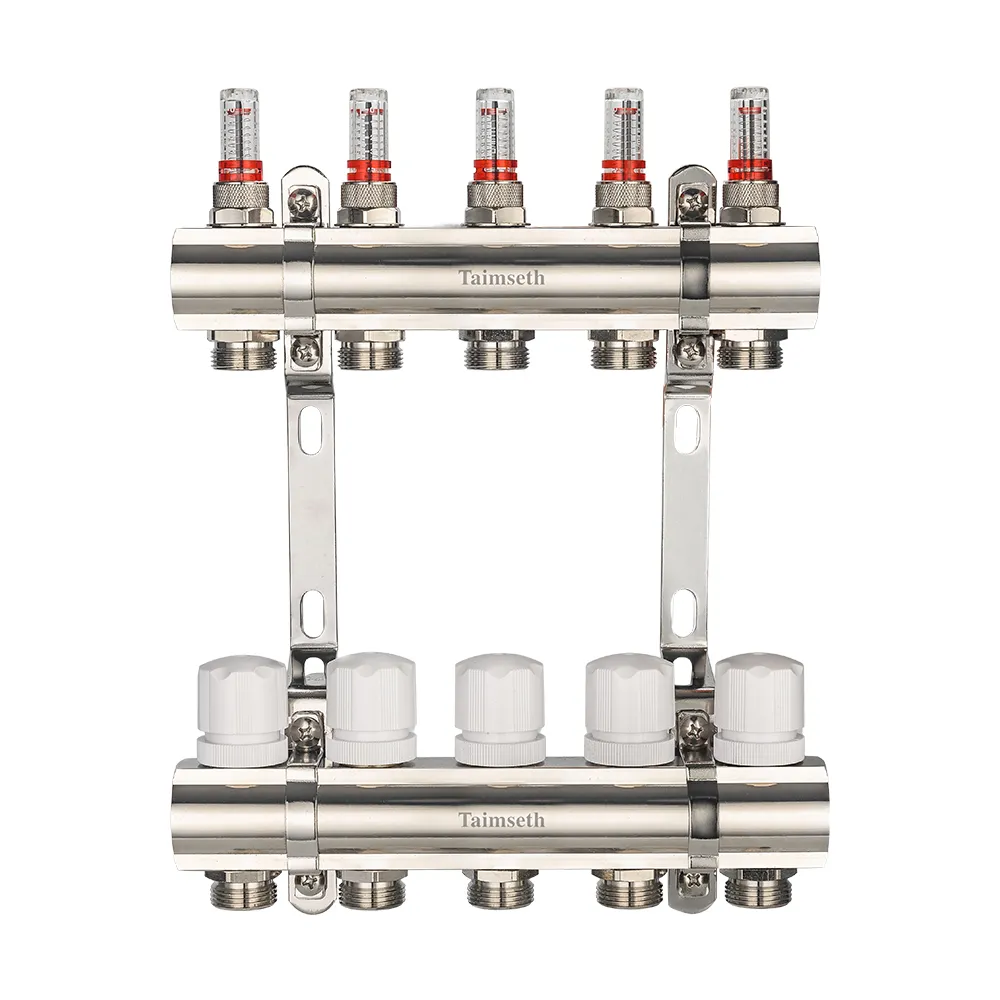
- Manifolds para aquecimento por piso radiante
- Sistemas de distribuição de aquecimento e refrigeração
Os atuadores termoelétricos são, em geral, compactos, silenciosos e adequados para o controlo automático de ligar/desligar.
Dependendo dos requisitos do sistema, estão normalmente disponíveis em normalmente fechado e normalmente aberto configurações.
2. Atuadores térmicos de cera
Atuadores térmicos de cera utilizar a expansão e a contração de uma cera especialmente formulada para gerar movimento mecânico.
Quando a cera é aquecida, o seu volume aumenta e empurra um pistão para fora. Quando a temperatura desce, a cera contrai-se e o pistão regressa à posição inicial.
As principais características incluem:
- Construção compacta
- Mecanismo de funcionamento relativamente simples
- Elevada força mecânica para o seu tamanho
- Movimento suave e gradual
Os atuadores de cera podem ser encontrados em válvulas de AVAC, dispositivos de controlo termostático, sistemas de arrefecimento automóvel e outros equipamentos sensíveis à temperatura.
3. Atuadores térmicos bimetálicos
A atuador bimetálico utiliza dois metais diferentes unidos entre si.
Como os dois metais têm coeficientes de expansão térmica diferentes, as variações de temperatura fazem com que a tira combinada se curve.
Este movimento pode ser utilizado para acionar:
- Interruptores elétricos
- Válvulas pequenas
- Amortecedores
- Mecanismos de controlo termostático
Os atuadores bimetálicos têm estruturas relativamente simples e podem funcionar sem sistemas de controlo eletrónico complexos.
No entanto, a sua amplitude de movimento e precisão de posicionamento podem ser mais limitadas quando comparadas com os atuadores controlados eletronicamente.
4. Atuadores pneumáticos
Atuadores pneumáticos utilizar ar comprimido para gerar movimento mecânico.
A pressão do ar atua sobre um diafragma ou pistão, o que altera a posição de uma válvula ou amortecedor ligado ao mesmo.
Os atuadores pneumáticos têm sido tradicionalmente utilizados em:
- Grandes edifícios comerciais
- Instalações institucionais
- Sistemas industriais de climatização
- Sistemas de automação de edifícios mais antigos
Embora as tecnologias de controlo eletrónico sejam hoje amplamente utilizadas, os atuadores pneumáticos continuam a funcionar em muitas instalações existentes.
Também podem continuar a ser úteis nos locais onde já existe uma infraestrutura de ar comprimido.
5. Atuadores hidráulicos
Atuadores hidráulicos utilizar líquido sob pressão em vez de ar comprimido.
A pressão hidráulica move um pistão ou outro elemento mecânico, gerando força para controlar o equipamento.
As suas principais características incluem:
- Elevada força de acionamento
- Movimento mecânico estável
- Adequação para cargas mais pesadas
- Excelente desempenho em aplicações industriais específicas
No entanto, os atuadores hidráulicos requerem componentes adicionais e sistemas de gestão de fluidos.
Por este motivo, são menos comuns em aplicações padrão de climatização a nível de sala do que os atuadores termoelétricos.
6. Atuadores motorizados para válvulas
Atuadores motorizados nem sempre são classificados como atuadores puramente térmicos, mas desempenham funções semelhantes de controlo de temperatura nos sistemas de climatização.
Estes dispositivos utilizam um motor elétrico para posicionar uma válvula de acordo com sinais provenientes de:
- Termóstatos
- Sensores de temperatura
- Controladores de AVAC
- Sistemas de Gestão de Edifícios (BMS)
Os atuadores motorizados podem proporcionar quer controlo de ligar/desligar ou controlo de modulação.
Com o controlo de modulação, a válvula pode permanecer parcialmente aberta, em vez de ficar simplesmente totalmente aberta ou totalmente fechada.
Isto permite ajustar o caudal de água com maior precisão, de acordo com a procura real de aquecimento ou arrefecimento.
Atuadores térmicos normalmente abertos vs. normalmente fechados
Outra classificação importante é a posição de funcionamento predefinida do atuador.
Normalmente fechado (NC)
A atuador normalmente fechado mantém a válvula fechada quando não há alimentação elétrica.
Quando é alimentado, o atuador abre a válvula.
Os modelos normalmente fechados são frequentemente escolhidos quando é necessário que o fluxo de água pare automaticamente caso o sinal de controlo ou a alimentação elétrica sejam interrompidos.
Normalmente aberto (NO)
A atuador normalmente aberto mantém a válvula aberta quando não há alimentação elétrica.
Quando é alimentado, o atuador fecha a válvula.
Esta configuração pode ser selecionada quando a conceção do sistema exigir um fluxo contínuo durante uma interrupção de energia.
A opção correta depende de:
- Configuração do sistema de climatização
- Requisitos de segurança
- Estratégia de controlo
- Requisitos de gestão energética
- Funcionamento à prova de falhas
Como escolher um atuador térmico
A seleção do atuador correto implica mais do que apenas escolher entre modelos normalmente abertos e normalmente fechados.
Entre os fatores técnicos importantes contam-se:
- Compatibilidade com válvulas
- Tensão de funcionamento
- Comprimento do curso do atuador
- Força de fecho ou de acionamento
- Tempo de resposta
- Tipo de sinal de controlo
- Configuração normalmente aberta ou normalmente fechada
- Condições ambientais de funcionamento
- Dimensões de ligação
- Compatibilidade com o BMS
Os engenheiros devem também determinar se a aplicação requer um funcionamento simples do tipo «ligado/desligado» ou um controlo proporcional.
No caso de projetos comerciais e industriais, a seleção dos atuadores deve ser coordenada com a estratégia global de controlo do sistema de climatização, em vez de ser tratada como uma decisão isolada relativa a um componente.
A Jinyi HVAC fornece soluções de climatização para os setores industrial e comercial, abrangendo a seleção de equipamentos, estratégias de controlo personalizadas, apoio à colocação em serviço e integração com sistemas de gestão de edifícios (BMS), de acordo com os diferentes requisitos de cada projeto.
Conclusão
Os atuadores térmicos proporcionam um controlo automático e fiável das válvulas, ajudando os sistemas de AVAC a melhorar a regulação da temperatura, a eficiência energética, a estabilidade do sistema e o desempenho operacional global.