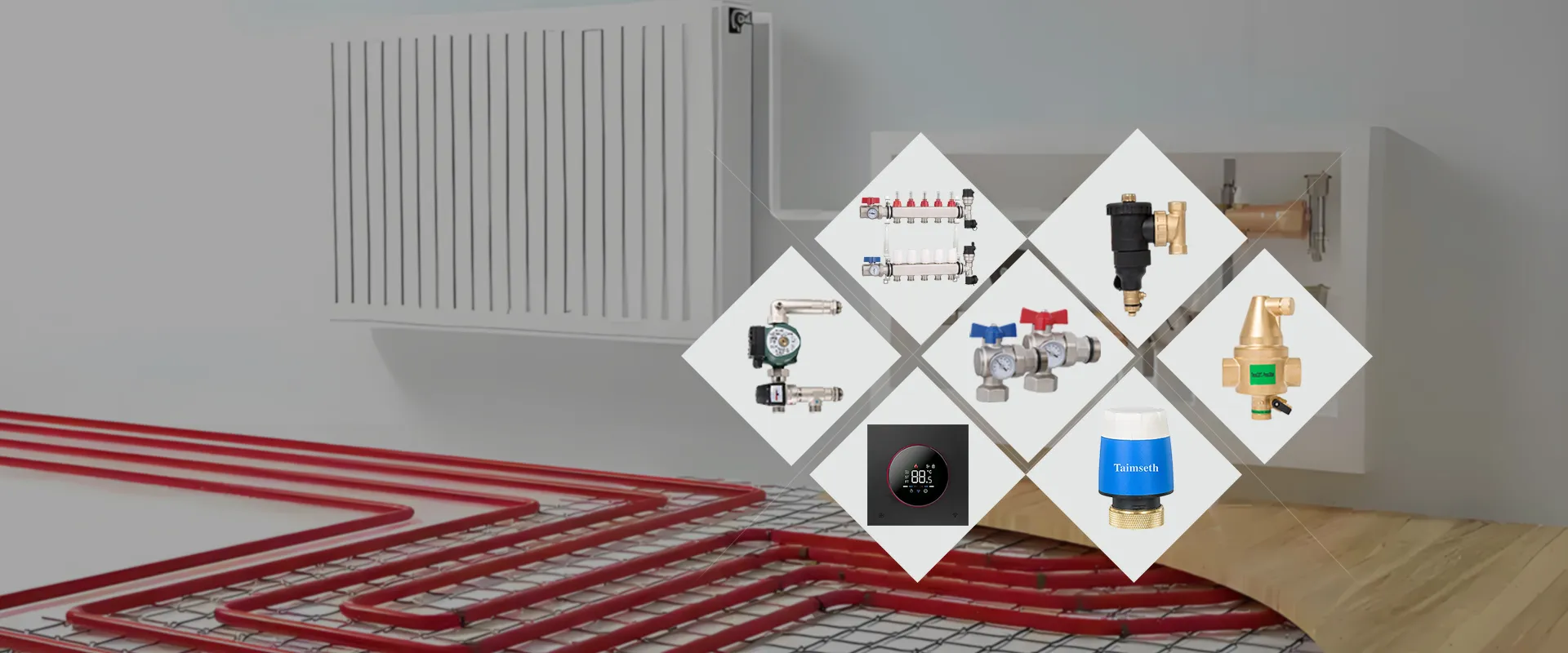
Uneven temperatures increase energy consumption, reduce occupant comfort, and overload HVAC equipment. Thermal actuators address these issues by automatically controlling heating or cooling flow.
A thermal actuator controls room temperature by opening, closing, or adjusting a hydronic valve according to signals from a thermostat or building control system. It regulates hot or chilled water flow to individual zones, helping maintain stable temperatures, reduce unnecessary energy use, and improve HVAC operating efficiency.
Understanding its operation, selection requirements, and installation conditions helps ensure accurate and reliable room temperature control.
1. What Is a Thermal Actuator?
A thermal actuator is a compact control device installed on a heating or cooling valve. It converts an electrical control signal into mechanical movement, which changes the position of the valve stem.
Depending on the system design, the actuator may control water flow to:
- Underfloor heating loops
- Radiators
- Fan coil units
- Zone heating circuits
- Hydronic cooling terminals
Unlike a manually operated valve, a thermal actuator responds automatically to room temperature demand. This makes it suitable for residential, commercial, and industrial HVAC zoning applications.
2. How Does a Thermal Actuator Regulate Temperature?
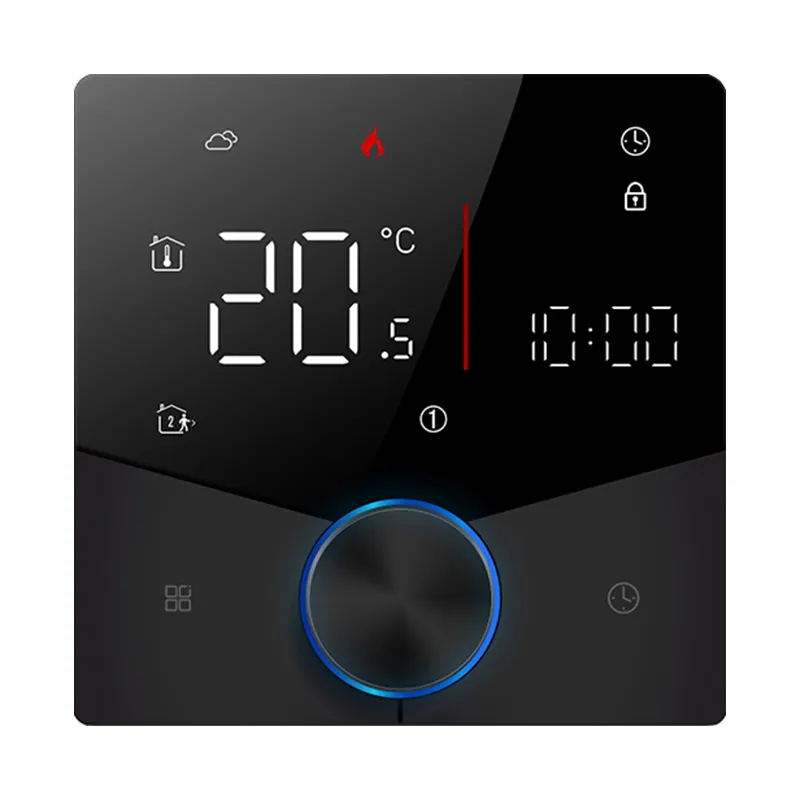
Room temperature control normally begins with a thermostat or temperature sensor.
The basic operating process is:
- The thermostat measures the current room temperature.
- The measured value is compared with the selected setpoint.
- The controller sends a signal to the thermal actuator.
- The actuator opens, closes, or adjusts the valve.
- Water flow through the heating or cooling circuit changes.
- The room temperature gradually moves toward the setpoint.
For example, when a room requires heating, the actuator opens the valve and allows more hot water to enter the circuit. When the required temperature is reached, the valve closes or reduces flow.
3. Normally Open and Normally Closed Actuators
Thermal actuators are generally available in two operating configurations.
| Actuator Type | Position Without Power | Typical Application |
|---|---|---|
| Normally Closed | Valve remains closed | Common zone heating and energy-control systems |
| Normally Open | Valve remains open | Applications requiring continuous flow during power loss |
The correct configuration depends on system safety requirements, control logic, and expected operation during a power failure.
Normally closed actuators are widely used because they stop water flow when power is removed. Normally open actuators may be selected when maintaining circulation is more important.
4. On/Off and Modulating Control
An on/off thermal actuator moves the valve between fully open and fully closed positions. It is suitable for many standard room temperature control systems.
A modulating actuator provides intermediate valve positions. This allows the system to adjust water flow more precisely according to the difference between the measured temperature and the setpoint.
Modulating control may provide:
- More stable room temperatures
- Reduced temperature fluctuation
- Smoother system operation
- Better coordination with variable-speed pumps
- Improved energy management
The control method must be compatible with the thermostat, controller, valve, and building management system.
5. Benefits of Zoned Temperature Control
Different rooms rarely have identical heating or cooling requirements. Occupancy, sunlight, equipment loads, insulation, operating schedules, and room orientation can all affect temperature demand.
Thermal actuators support individual zone control by allowing each room or circuit to operate independently.
This can help:
- Prevent overheating or overcooling
- Improve occupant comfort
- Reduce unnecessary water circulation
- Limit energy waste in unoccupied spaces
- Support different temperature setpoints
- Improve overall HVAC system efficiency
Zoning is especially useful in offices, hotels, apartments, commercial buildings, workshops, and multi-room facilities.
6. Key Selection Factors
A thermal actuator must match both the valve and the control system. Selecting an incompatible model may cause poor control, incomplete valve movement, or equipment failure.
Important selection parameters include:
- Operating voltage: Common options include 24 V and 230 V.
- Control type: On/off, floating, or proportional control.
- Fail position: Normally open or normally closed.
- Valve connection: Thread size, adapter type, and mounting method.
- Stroke length: Must match the required valve movement.
- Actuating force: Must be sufficient to operate the valve reliably.
- Response time: Should suit the heating or cooling application.
- Protection rating: Important in humid, dusty, or demanding environments.
- Ambient temperature range: Must match installation conditions.
System designers should also confirm compatibility with thermostats, relays, transformers, controllers, and BMS interfaces.
7. Installation and Commissioning
Correct installation is essential for reliable temperature control.
Before fitting the actuator, the installer should confirm that the valve stem moves freely. A sticking or damaged valve can prevent proper actuator operation.
During installation:
- Verify the actuator voltage and wiring diagram.
- Confirm the valve and actuator connection type.
- Secure the actuator without applying excessive force.
- Connect the thermostat or control signal correctly.
- Label each actuator according to its room or zone.
- Test the opening and closing sequence.
- Check the system for leakage, noise, and delayed response.
Commissioning should include raising and lowering each thermostat setpoint to confirm that the corresponding actuator responds correctly.
8. Factors Affecting Control Accuracy
The thermal actuator is only one part of the control system. Accurate performance also depends on thermostat location, valve sizing, water temperature, flow rate, pipework design, and hydraulic balancing.
A thermostat should not be installed near:
- Direct sunlight
- Doors or open windows
- Supply air outlets
- Heat-producing equipment
- External walls with unusual temperature variation
Poor hydraulic balancing may cause some rooms to receive excessive flow while others receive insufficient flow. As a result, temperature problems may continue even when the actuator operates normally.
9. BMS and Smart HVAC Integration
Thermal actuators can be integrated with building management systems, intelligent thermostats, and remote monitoring platforms.
A coordinated system may monitor:
- Room temperature
- Occupancy schedules
- Valve operating status
- Pump demand
- Boiler or chiller operation
- Energy consumption
- System alarms
When multiple zone valves close, a variable-speed pump can reduce its output accordingly. This helps prevent excessive differential pressure and unnecessary electricity consumption.
Jinyi HVAC provides customized HVAC solutions that may include zoned control, building management system integration, remote monitoring, commissioning guidance, and long-term technical support.
10. Maintenance and Troubleshooting
Thermal actuators generally require limited maintenance, but regular system inspection remains important.
Common checks include:
- Confirming secure actuator mounting
- Inspecting wiring and electrical connections
- Testing thermostat accuracy
- Checking valve stem movement
- Verifying opening and closing response
- Reviewing room temperature trends
If a room remains too warm, the valve may be stuck open, the actuator may be receiving a continuous signal, or the thermostat may be incorrectly positioned.
If a room heats slowly, possible causes include trapped air, insufficient water flow, low supply temperature, incorrect balancing, or incomplete valve opening.
Proper selection, installation, balancing, and commissioning allow thermal actuators to deliver stable temperatures, efficient zoning, and dependable HVAC performance.