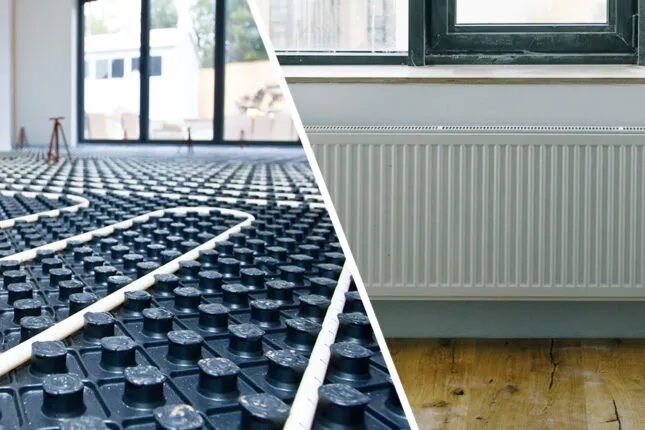
Underfloor Heating for New Builds

Considerations around underfloor heating for new build

Underfloor heating (UFH) is the ideal solution for the modern, new build home. It’s discrete, efficient, and creates a wonderful, ambient warmth throughout the house.

Whether you’re building a house out of super-insulated panels, timber frames, or traditional brick and block, we’re here to help you create your ideal heating scheme.

Get in Touch

    Why choose UFH for a new build?

    Easy to install

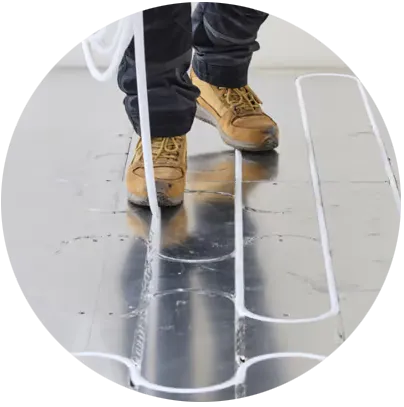
    Easy to install at first-fix stage within the screed layer.

    It’s affordable

    The system runs at lower flow temperatures, reducing heating bills.

    Efficiency with a heat pump

    Underfloor heating is 45% more efficient than radiators when paired with heat pumps.

    Installing UFH on the ground floor

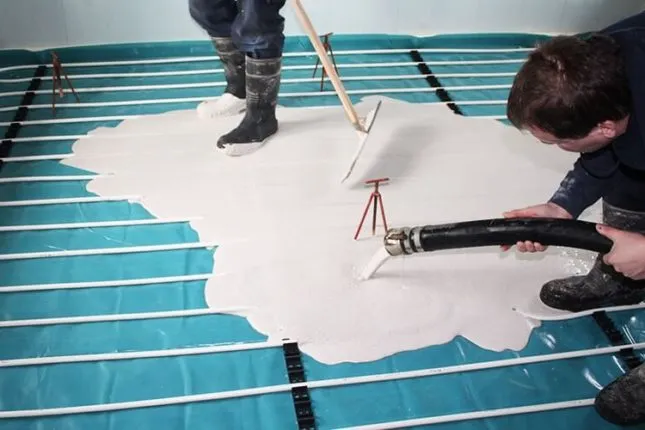
    For most new build projects, underfloor heating will be installed on the ground floor, within the screed layer at first fix.

    Screed can take a while to warm-up from cold so, for the most comfortable experience, we recommend keeping the thermostat at a constant low temperature, even if the room is unoccupied. This ensures that the system quickly gets up to temperature when required.

    Tip: liquid pumped screed offers better conductivity ratings than hand-mixed screed!

    Can I have UFH on the first floor?

    Underfloor heating can be installed wherever you need it, including upstairs on the first floor.

    There are systems designed to be used between joists in suspended timber floors as well as with POSI joists/Truss Joist I-joists (TJI joists). It can also be applied in screed over solid floors.

    You can adjust the heat output in individual rooms so you can keep your bedrooms at a comfortable, lower temperature. Plus, it works very efficiently under carpets/underlay that have a suitable tog rating.

    Can I have radiators & UFH in the same house?

    Yes, it’s very common to have radiators and underfloor heating in the same house.

    The key thing is to connect each system independently to the boiler because radiators run at higher flow temperatures than underfloor heating.

    Our manifolds have blended valves so the flow water returning from the radiators is mixed with the boiler flow in order to deliver water at the right temperature to the underfloor heating.

    Radiators are from a bygone era and don’t really have a place in modern home design

    Used Jinyi for their sustainable, multi-story new build.

    Get Free Solution

      What type of heat source can I have?

      Underfloor heating offers outstanding heating performance with any thermostatically controlled heat source, whether that source is a combi boiler or a heat pump. You simply need to design the system to account for their differing heat outputs.

      For example, heat pumps supply hot water at a lower flow temperature (typically 40°-45°C) than a boiler (50°-55°C). So, if you’re designing an underfloor heating system which is paired with a heat pump, you’ll probably need to place the system’s hot water pipes closer together than you would for a boiler to maximise the amount of heat which is conducted through the floor deck.

      Part L building regs

      Part L Building Regulations covers the energy performance of buildings in England and Wales. All projects, whether retrofit or new build, must adhere to them.

      Recent changes to the regulations mean that the maximum flow temperature for newly installed heating systems has been lowered, from 80oC to 55oC.

      This means radiators may have to be larger to warm rooms effectively. The good news is that underfloor heating systems are already optimised to run at the lower heat!

      Find the right UFH system for your project

      Use the Underfloor Heating Selector Tool to find the right system for your project.

      Get Free Solution