Un control deficiente de las válvulas provoca un calentamiento desigual, un desperdicio de energía y problemas de confort. Los actuadores termoeléctricos proporcionan una regulación automática y precisa para los sistemas de calefacción modernos.
Un actuador termoeléctrico es un dispositivo que controla las válvulas de calefacción mediante señales eléctricas para regular el caudal de agua caliente en sistemas como la calefacción por suelo radiante y los sistemas de climatización. Mejora la precisión de la temperatura, la eficiencia energética y el control automático por zonas.
Comprender cómo funciona este componente te ayuda a elegir la solución adecuada para el control de la calefacción.
¿Qué es un actuador termoeléctrico?
A actuador termoeléctrico Es un dispositivo de control de válvulas accionado eléctricamente, diseñado para abrir y cerrar válvulas de forma automática. Se utiliza habitualmente en sistemas hidrónicos de calefacción por suelo radiante, unidades de ventiloconvector, radiadores y aplicaciones de climatización para regular el caudal de agua en función de los requisitos de temperatura.
A diferencia de las válvulas manuales, que requieren un ajuste manual, los actuadores termoeléctricos reciben señales de termostatos o controladores inteligentes. Cuando cambia la temperatura ambiente, el actuador responde ajustando la posición de la válvula, lo que permite que entre más o menos agua caliente en el sistema.
Esta regulación automática crea un ambiente interior más confortable y, al mismo tiempo, reduce el consumo innecesario de energía.
¿Cómo funciona un actuador termoeléctrico?
Un actuador termoeléctrico funciona mediante un proceso sencillo pero fiable:
- Recepción de la señal
El termostato o el regulador de calefacción envía una señal eléctrica cuando es necesario ajustar la temperatura. - Proceso de expansión térmica
En el interior del actuador, un elemento calefactor calienta una cera especial o un material de expansión. A medida que el material se expande, empuja un componente mecánico que mueve la válvula. - Ajuste de válvulas
El actuador abre o cierra la válvula, controlando el caudal de agua que circula por el circuito de calefacción. - Mantenimiento de la temperatura
Cuando se alcanza la temperatura deseada, el controlador interrumpe la señal, lo que permite que el actuador vuelva a su posición inicial.
Este proceso permite un control preciso sin necesidad de una intervención manual constante.
Componentes principales de un actuador termoeléctrico
Un actuador termoeléctrico típico consta de varias piezas importantes:
Resistencia eléctrica
El elemento calefactor transforma la energía eléctrica en calor, lo que activa el mecanismo de expansión interno. Su rendimiento influye directamente en la velocidad de respuesta y en la fiabilidad.
Unidad de expansión
La unidad de expansión es el componente funcional principal. Se expande al calentarse y genera el movimiento necesario para accionar la válvula.
Interfaz de conexión de válvulas
El diseño de las conexiones permite instalar el actuador en diferentes tipos de válvulas de distribución y componentes de sistemas de calefacción.
Carcasa protectora
La carcasa exterior protege los componentes internos del polvo, la humedad y los efectos del entorno, lo que garantiza un funcionamiento a largo plazo.
Ventajas del uso de actuadores termoeléctricos
1. Mejor control de la temperatura
Los actuadores termoeléctricos permiten una regulación precisa por zonas. Cada habitación puede mantener su temperatura ideal, lo que mejora el confort general.
Por ejemplo, los dormitorios, los salones y las oficinas pueden funcionar con diferentes ajustes de temperatura sin que ello afecte a los demás.
2. Mayor eficiencia energética
Al controlar automáticamente el caudal de agua, los actuadores evitan un calentamiento innecesario. El sistema solo suministra calor cuando es necesario, lo que contribuye a reducir los costes energéticos.
Esto es especialmente importante en el caso de los edificios de gran tamaño, en los que la eficiencia de la calefacción tiene un impacto significativo en los gastos de funcionamiento.
3. Integración de un sistema de calefacción inteligente
Los actuadores termoeléctricos modernos pueden conectarse a termostatos inteligentes, sistemas de automatización de edificios y controladores centralizados.
Los usuarios pueden gestionar las zonas de calefacción a distancia y crear programas de temperatura personalizados.
4. Fácil instalación y mantenimiento
La mayoría de los actuadores termoeléctricos presentan diseños compactos y conexiones estandarizadas, lo que facilita su instalación a los profesionales de la calefacción.
Requieren un mantenimiento mínimo en comparación con los sistemas de control mecánicos.
Aplicaciones de los actuadores termoeléctricos
Los actuadores termoeléctricos se utilizan ampliamente en diversas aplicaciones de calefacción y climatización:
Sistemas de calefacción por suelo radiante
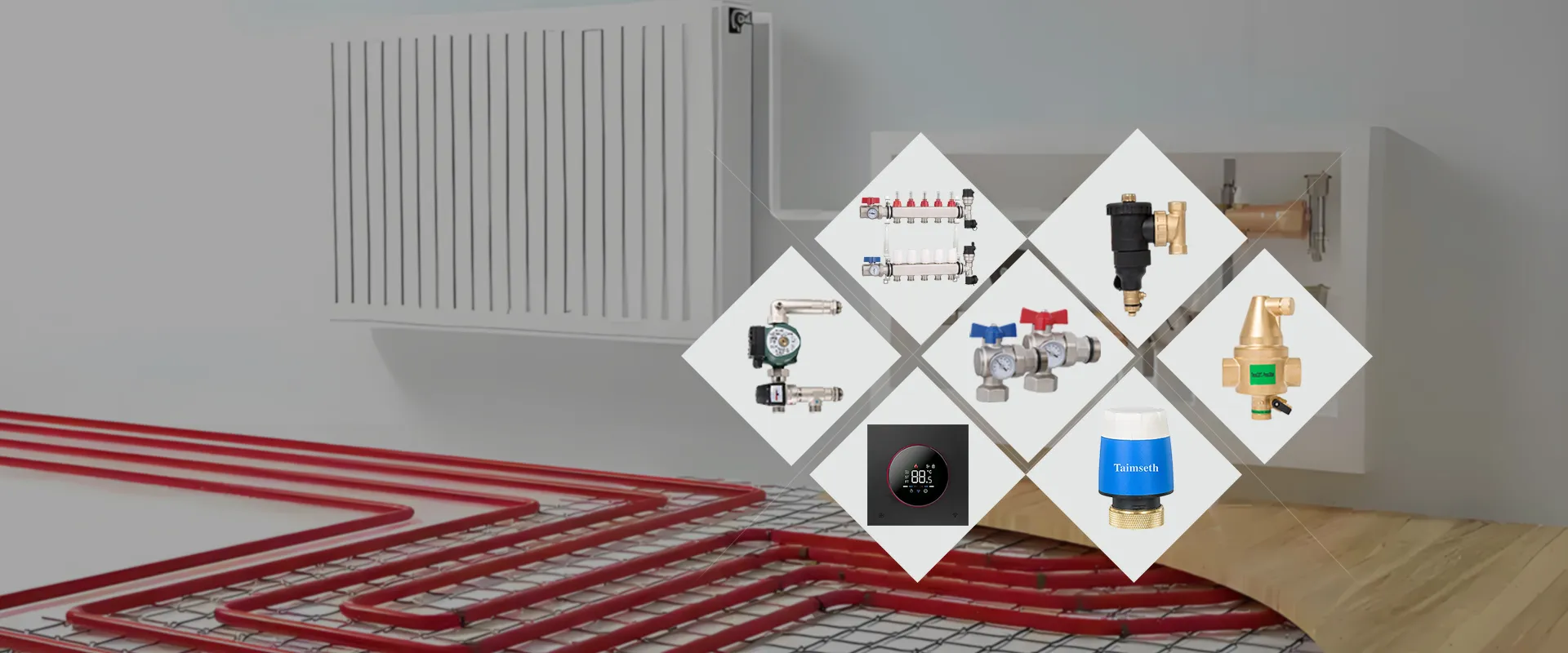
En la calefacción por suelo radiante, se instalan actuadores en los colectores para controlar los circuitos de calefacción individuales. Estos garantizan una distribución equilibrada del calor por las diferentes estancias.
Sistemas de climatización para uso comercial
Los edificios de oficinas, los hoteles, los hospitales y los centros comerciales utilizan actuadores para la gestión automatizada de la temperatura.
Calefacción doméstica
Las viviendas equipadas con sistemas de calefacción hidrónica disfrutan de un mayor confort y de un menor consumo energético gracias al control automático de las válvulas.
Unidades de ventiloconvectores
Los actuadores regulan el caudal de agua en los sistemas de fan coils para mantener una temperatura interior estable.
Actuadores normalmente abiertos frente a actuadores normalmente cerrados
Los actuadores termoeléctricos suelen estar disponibles en dos tipos de funcionamiento:
Normalmente cerrado (NC):
La válvula permanece cerrada sin alimentación eléctrica y se abre cuando se suministra corriente. Este tipo de válvula se utiliza habitualmente en sistemas de calefacción, ya que evita un flujo incontrolado de agua en caso de corte de corriente.
Normalmente abierto (NO):
La válvula permanece abierta sin alimentación eléctrica y se cierra cuando se suministra corriente. Esta opción puede resultar adecuada para aplicaciones específicas de refrigeración o ventilación.
La elección del tipo adecuado depende de los requisitos del sistema y de consideraciones de seguridad.
Cómo elegir el actuador termoeléctrico adecuado
A la hora de elegir un actuador, hay que tener en cuenta varios factores:
- Requisitos de tensión: Entre las opciones más habituales se encuentran los modelos de 24 V y 230 V.
- Compatibilidad con válvulas: Asegúrate de que el actuador sea compatible con la conexión del colector o de la válvula.
- Método de control: Comprueba la compatibilidad con termostatos y sistemas de automatización.
- Tiempo de respuesta: Es posible que, para determinadas aplicaciones, sea necesario un funcionamiento más rápido.
- Índice de protección: Elige los niveles de protección adecuados para los entornos de instalación.
Un actuador seleccionado adecuadamente mejora el rendimiento del sistema y prolonga la vida útil del equipo.
Por qué son importantes los actuadores termoeléctricos en los sistemas de calefacción modernos
Con el aumento de la demanda de edificios energéticamente eficientes, los componentes de control de la calefacción están cobrando cada vez más importancia. Los actuadores termoeléctricos sirven de enlace entre los sistemas de control inteligentes y los sistemas físicos de calefacción.
Permiten gestionar con precisión el caudal de agua, facilitan las estrategias de zonificación y mejoran la eficiencia general de las soluciones de calefacción hidrónica.
Para los fabricantes, distribuidores y profesionales del sector de la climatización, los actuadores termoeléctricos fiables son componentes esenciales para la creación de sistemas de calefacción avanzados.
En las soluciones modernas de calefacción por suelo radiante y climatización, los actuadores termoeléctricos contribuyen a transformar la calefacción tradicional en sistemas de control de temperatura inteligentes, eficientes y cómodos.
Resumen
Los actuadores termoeléctricos permiten el control automático de las válvulas, lo que mejora la eficiencia de la calefacción, el confort y el rendimiento de los sistemas inteligentes.